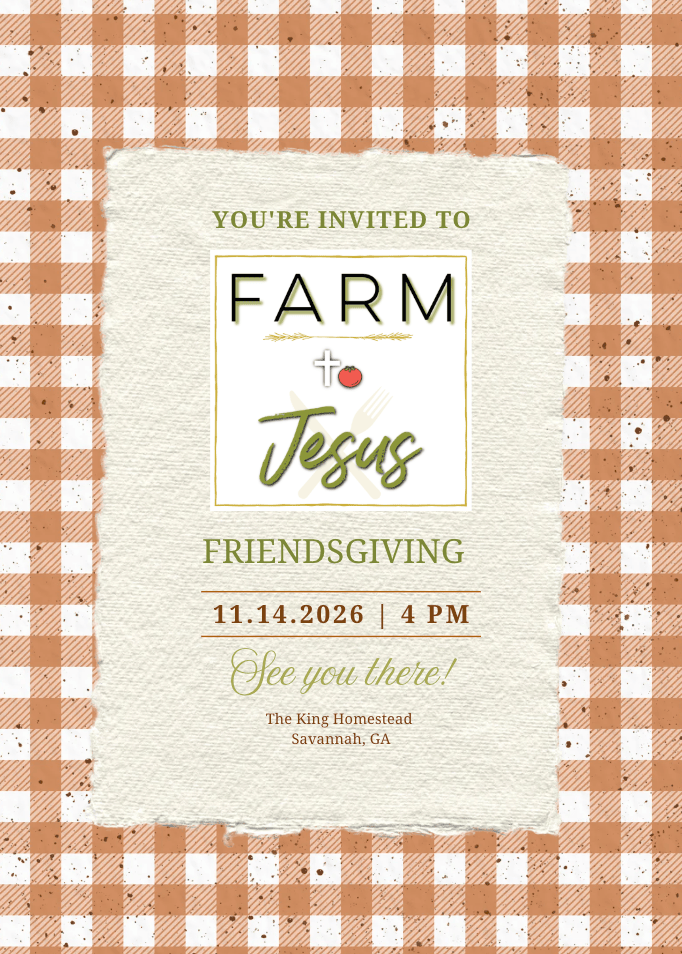
This FtJ is a bit different than usual because it’s a Friendsgiving potluck!
Please add what you plan to bring to the sign-up sheet below so we have a great, varied meal.
>>> FRIENDSGIVING DISH SIGN-UP SHEET <<<
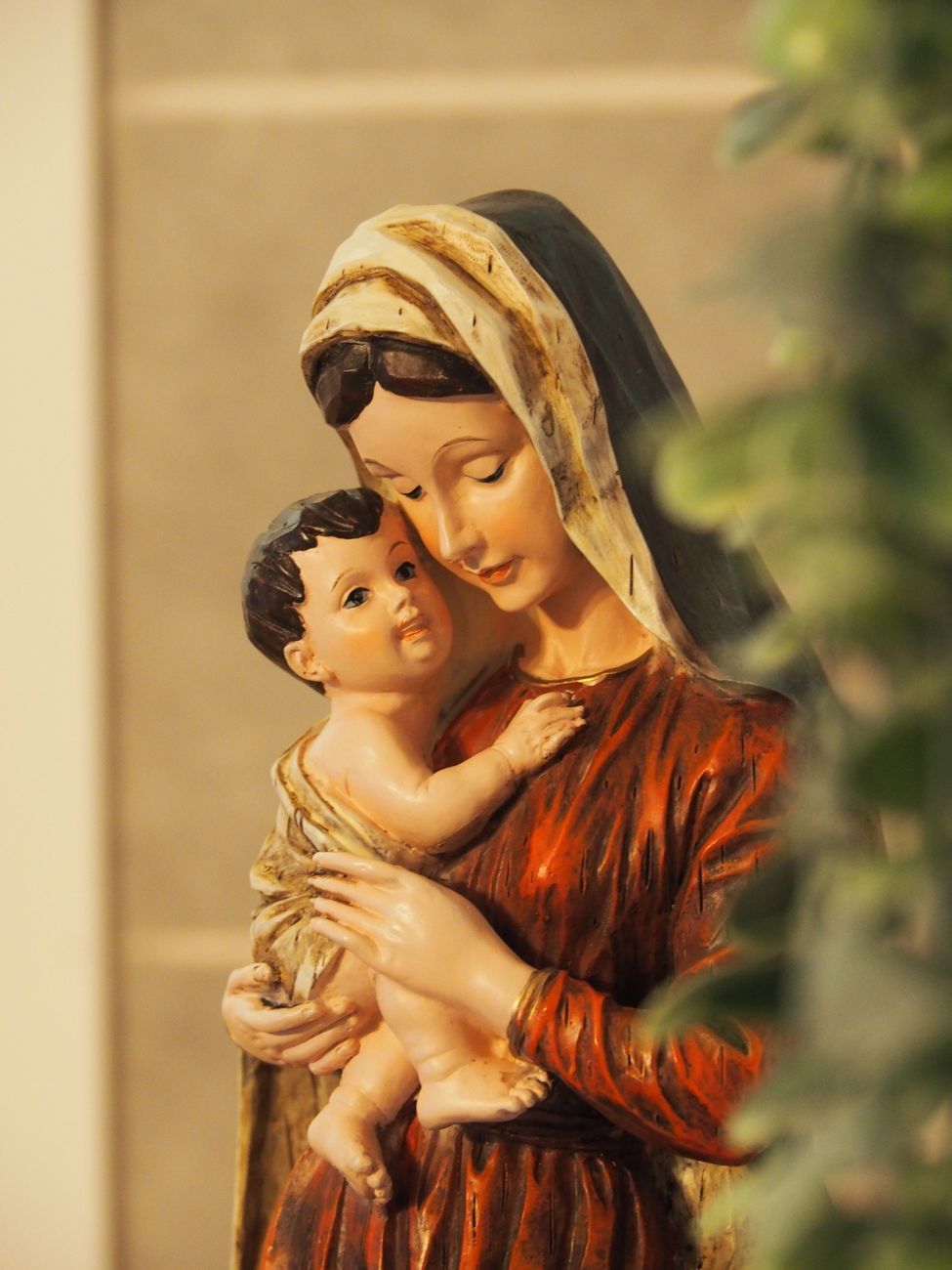
Why do Marian Consecration?
1. God Has a Mom
- The Divinely Chosen Path: God could have saved humanity in any way, but He chose to come to earth through Mary (1:01). Because Jesus came to us through Mary, believers are invited to follow His example and go through Mary back to God (1:27).
- The 30 Hidden Years: Out of Jesus’ 33 years on earth, only 3 were spent in public ministry (1:55). The other 30 years were spent at home with Mary, allowing her to mother Him in virtues, prayer, and scripture (2:15).
- A Powerful Ratio: Jesus spent 10 times longer at home with Mary than He did preaching (2:59). This highlights the immense importance of allowing Mary to dwell with believers to mother them into Christ (3:07).
2. God Gives His Mom to Us
- A Final Request: On the cross, in His final dying breaths, Jesus issued His “last will and testament” (3:29). He looked at Mary and said, “Woman, behold your son,” and to the beloved disciple John, “Behold your mother” (4:07).
- Mother of All Believers: This moment represents Jesus giving Mary to all believers across generations (4:21). To be born again in faith means having Mary as a mother (4:33).
- Taking Her Into the Home: The scriptures note that from that hour, John took Mary into his home (4:58). Saint Pope John Paul II interpreted this as John inviting Mary into his inner, spiritual life and heart (5:15).
- Personalized Love: Mary loves every single believer with a distinct, personal affection (5:40). Free from sin and full of grace, she mothers Christ inside each individual according to their specific needs (5:56).
3. We Give Ourselves to Our Mom
- Perfect Imitation of Christ: Marian Consecration is simply perfectly imitating Jesus (7:03). Just as Jesus abandoned everything—His past, present, future, and goods—to Mary, believers are asked to do the same (7:20).
- Surrendering Everything: Consecration means laying everything at Mary’s feet, asking her to form you into a saint and bring you to full maturity in Christ (7:41).
- The 33-Day Process: A common practice involves a 33-day period of preparation (8:06). This represents one day for each year of Jesus’ life (8:13).
- The Final Commitment: Throughout the 33 days, participants pray, reflect, and get to know Mary (8:19). At the end of the period (typically on a Marian feast day), they formally entrust everything to her (8:25).
- Resource Recommendation: Father Tyler highlights the book 33 Days to Morning Glory by Father Michael Gaitley as an excellent resource for the process (7:56).
The Militia of the Immaculata
The Militia of the Immaculata is the official prayer “arm” of Farm to Jesus.
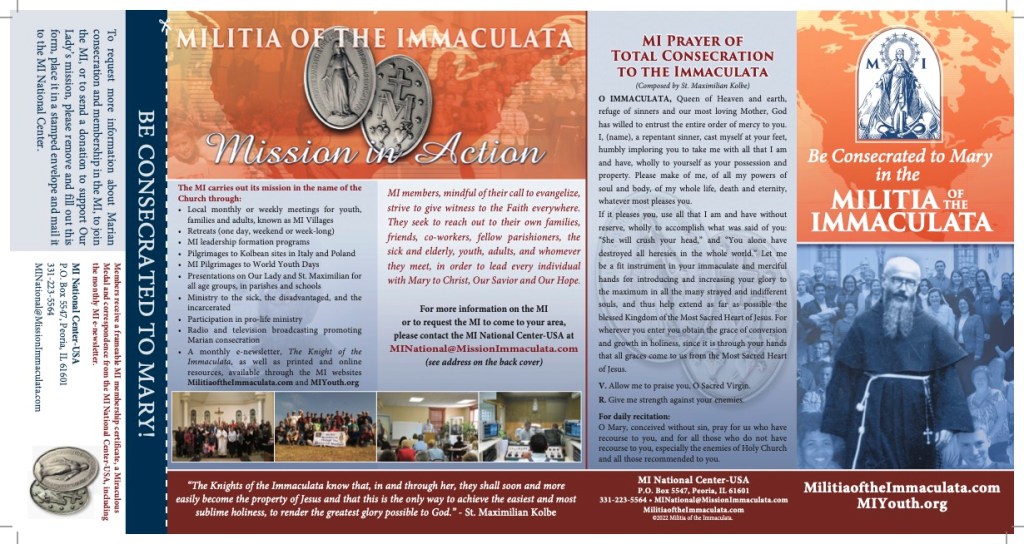
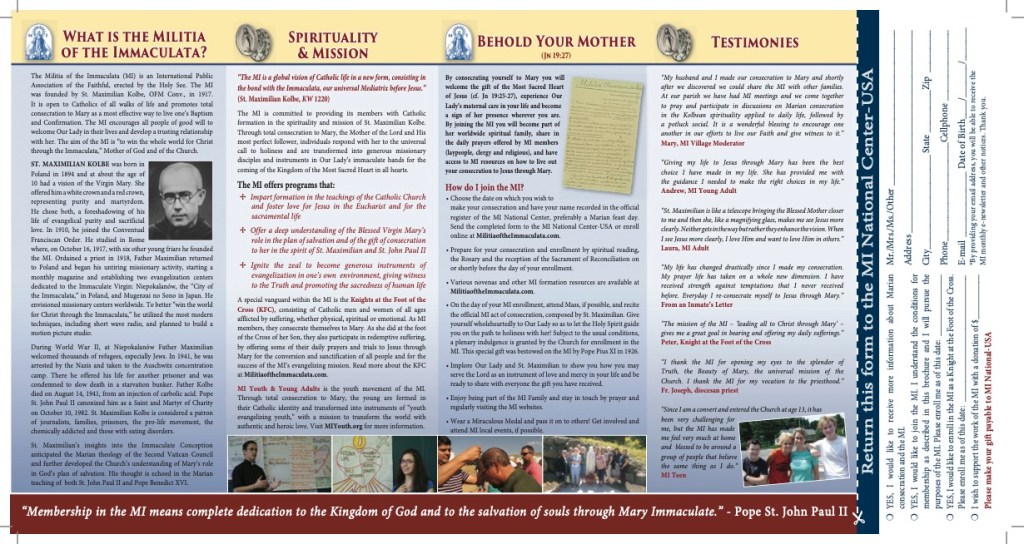
| Origin & Inspiration | • Founded by St. Maximilian Kolbe while he was a young friar in Rome (0:48). • Inspired after witnessing a Freemason procession heading toward the Vatican, where they openly hailed Satan (0:54). • Kolbe realized that if evil forces could use people as instruments of chaos, the faithful could surrender themselves to the Virgin Mary to act as powerful instruments of good (1:07). |
| The Consecration Method | • Described as a shorter, faster, and easier alternative compared to the 33-day method by St. Louis de Montfort (0:34). • The core goal is the total surrender of one’s life, talents, money, sins, and weaknesses to the Virgin Mary (1:51). • Emphasizes becoming her “property and possession”—acting like a pencil with no free will of its own, so she can use you as an instrument (1:58). |
| Core Practice: The Miraculous Medal | • St. Maximilian Kolbe strongly advocated for wearing the Miraculous Medal (4:03). • Serves as a tangible reminder of one’s consecration, putting personal goals aside to bring Mary’s presence to others (4:17). • Functions as a spiritual safeguard against the devil, who seeks to remove it (4:51). • Used as an evangelical tool; giving a medal to others serves as a physical prayer that opens their souls to conversion (5:09). |
| Three Steps to Living the Consecration | 1. Submission: Voluntarily surrender to allow Mary and the Holy Spirit to sanctify and form the soul into the likeness of Christ (6:03). 2. Openness: Pausing to listen to Mary’s voice and conscience (6:37). 3. Action: Acting upon what she commands, even when it requires doing difficult things or facing spiritual warfare (6:49). |
| How to Join | • Enrolling formally through official organization militiaoftheimmaculata.com (5:34).• Making an intentional act of the will by reciting the formal Act of Consecration written by St. Maximilian Kolbe, ideally on a Marian feast day (10:06). |
The History of Marian Consecration
Marian consecration is a spiritual practice with roots tracing back to the earliest centuries of the Church, evolving through the ages to emphasize Mary as the ultimate collaborator in God’s plan of salvation (1:40). The video details the historical progression of this devotion and how Mary’s own life serves as the perfect model for consecration (3:40).
Historical Timeline of Marian Devotion
- 3rd Century Background: The famous Subtuum Praesidium (“We fly to thy protection…”) prayer dates back to this era (0:34). Because the earliest surviving physical copy is from the 200s, the prayer itself is likely much older, proving that deep Marian piety existed from the very beginning of the Church (1:00).
- 4th and 5th Centuries: Saint Ephraim explicitly wrote about “belonging to Mary” in the 4th century (1:47). By the 5th century, a personal form of consecration emerged known as “holy servitude,” where believers dedicated themselves as Servants of Mary (2:00).
- 7th and 8th Centuries: The concept developed into a form closer to modern understanding through Saint Ildefonsus of Toledo and Pope John VII (2:08). In the mid-8th century, Saint John Damascene wrote a definitive formula: “We consecrate our minds and our souls and our bodies… our very selves.” (2:28).
- Evolution of Terminology: Over the generations, Christians have expressed this devotion using various structural concepts, including oblatio (oblation/offering), comendatio (recommendation), servitude, and dedication (3:20).
- Modern Eras: This line of Marian theology grew increasingly prominent, culminating in the major frameworks of Saint Louis de Montfort (18th century), Saint Maximilian Kolbe (20th century), and the apparitions at Fatima (2:58).
The Biblical Model: Mary’s Life as the Ultimate Icon of Consecration
- The Annunciation & Consent: At the “fullness of time,” Mary gave her Fiat (consent) to the Angel Gabriel (3:53). The speaker emphasizes that she was not a mere passive conduit; God actively sought her human consent to bring about redemption (5:08).
- Overshadowing of the Spirit: Upon her consent, she was overshadowed by the Holy Spirit, drawing a parallel to the cloud descending upon the Old Testament Tabernacle in the time of Moses (5:54). However, Mary’s consecration is far greater because she held God In the Flesh rather than a mere symbol (6:10).
- The Visitation: Immediately after the Annunciation, Mary did not go out to merely share the good news; she brought the presence of Salvation itself to Saint John the Baptist in Elizabeth’s womb, causing him to leap for joy at the sound of her voice (6:27).
- The Presentation: Forty days after Christ’s birth, Mary acted in the role of a mediator (mediatrix) by offering her infant son to God the Father in the Temple, willingly anticipating the profound sorrow prophesied by Simeon (7:04).
- The Wedding at Cana: When Mary intervened to ask Jesus for wine, she did so knowing it would fast-track his path to the cross (8:35). Her command to the servers, “Do whatever he tells you,” defines her perpetual role for Christians: she is not just an icon to look at, but a guide who actively directs souls to perform Christ’s will (9:29).
- The Crucifixion: Her lifelong consecration reached its ultimate fulfillment at the foot of the cross, where she offered her Son to the Father in the greatest possible sorrow (9:55).
Marian consecration is a spiritual practice of dedicating oneself to Jesus through the help and intercession of the Virgin Mary (1:08). Fr. Chris Alar breaks down the simple definition of this devotion, its biblical roots, historical connections, and why it enhances—rather than replaces—a believer’s relationship with God (1:08).
Core Theology & Concept of Consecration
- Dedicating Oneself to Holy Use: To be consecrated fundamentally means to be “set apart to be holy” (0:49). Marian consecration is simply a path to entrust yourself to Mary so she can guide you securely to Jesus (1:08).
- Mary as a Spiritual Broker: Consecration involves giving Mary all of your spiritual resources, including prayers, masses, rosaries, and personal suffering (2:06). Rather than overwhelming yourself by trying to pray for every individual need, you trust Mary as a “broker” to invest and distribute those graces where they are needed most (2:13).
- Fostering Immediate Union with Christ: Catholic teaching holds that consecrating oneself to Mary does not subtract from or substitute love for God (6:19). As reaffirmed in Vatican II (Lumen Gentium), calling upon Mary’s intercession does not hinder union with Christ but actively fosters it (6:35).
- The “Masterpiece” Analogy: Citing an analogy popularized by Scott Hahn, Alar compares Mary to a masterpiece like Michelangelo’s Pieta (44:31). Honoring the artwork does not offend the creator; rather, praising Mary as God’s greatest human masterpiece inherently honors God, the ultimate Artist (45:25).
The Easiest Way to Sainthood
- Quickest Path to Holiness: Referencing St. Louis de Montfort, the video notes that total consecration to Jesus through Mary is the “quickest, easiest, surest, and most perfect way to become a saint” (7:23).
- Sweetening the Cross: While all Christians must carry their daily crosses, having Mary as a spiritual mother helps turn bitter sufferings into something sweet, akin to a mother putting honey on a spoon of bitter medicine (9:10).
- Biblical Foundations: The devotion is rooted in John 19:26–27, where Jesus at the cross tells the beloved disciple (representing all believers), “Behold your mother,” and John takes her into his home (7:44). Alar notes this points strictly to a spiritual motherhood, as Scripture records that John’s natural mother was already standing right next to him at the foot of the cross (12:32).