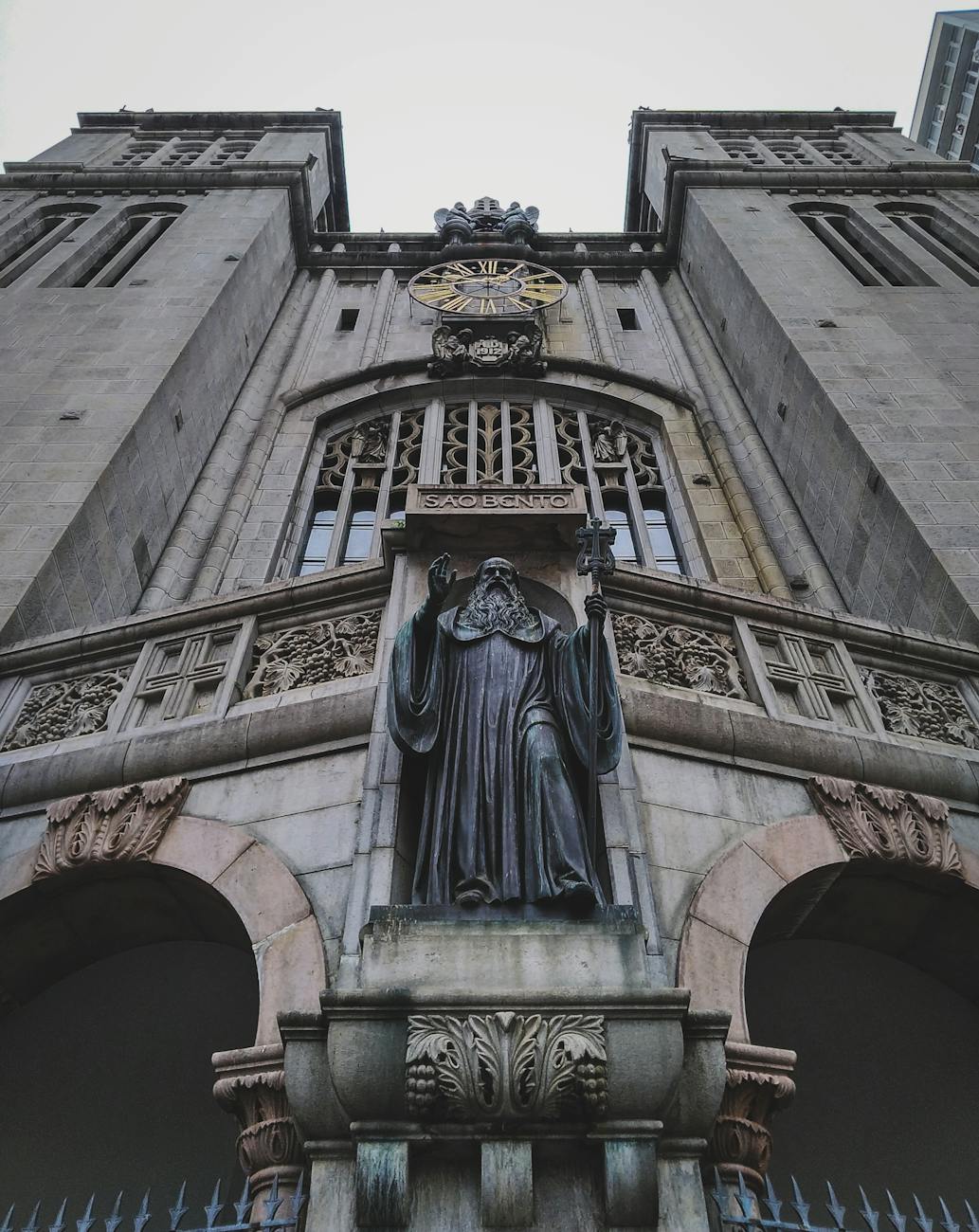
What St. Benedict & His Order Can Teach Today’s Laity
By DEREK ROTTY
- Benedict himself was a layman: There is no evidence in the historical records that Benedict received the Sacrament of Holy Orders. A layman developed this lifestyle, and lay persons certainly can keep it and incorporate it into their days. Even lay persons who have not (or will not) take up life in a monastery will find much in the writing of St. Benedict that will help them become holier by leading a type of monastic lifestyle.
- Renounce the world for the sake of Jesus:
In chapter four of the Rule, he writes, “Your way of acting should be different from the world’s way; the love of Christ must come before all else.” – This is the essence of the path to holiness, and it is just as applicable to the lives and efforts of the laity as it is to priests, monks, or religious sisters. - The value of a consistent schedule:
The very foundation of spiritual growth and strength is consistency. Dom Jean-Baptiste Chautard, an abbot in the Benedictine tradition (Trappists observe a strict application of the Rule), teaches consecrated religious and laity in his classic spiritual text, The Soul of the Apostolate. “Draw up a schedule,” he writes, “allotting to each activity a fixed time…. And then do violence to yourself, if necessary, to keep it, and control the flood of your activities” (The Soul of the Apostolate, Part V). We humans are creatures of habit, and we need that in our spiritual lives as much as our secular lives. - Lectio Divina:
making daily space for the Liturgy of the Hours or meditation on the Bible would be a good start. At the very least, a lay person could practice the Benedictine mandate of silence at night. Meditating on the day’s Gospel for fifteen minutes before bed would surely reap great benefits in that person’s life and in the world. - Labor of Obedience:
St. Benedict wrote in the Prologue of his Rule that giving up our own wills and being armed with the “strong and noble weapons of obedience” will make us ready to do battle for our Lord and King.
Each of us has several settings in which to practice joyful obedience. We can certainly be obedient to our spouses. We can practice obedience toward our superiors at work. We can even practice obedience toward politicians and government leaders with whom we disagree (so long as it doesn’t violate the moral law). - Living the Benedictine spirituality, as a monk, an oblate, or simply as a layperson, is really nothing other than a specific and sure way to live out the universal call to holiness.
Applying St. Benedict’s Rule to Fatherhood and Family Life

 Farm to Jesus