
Before Discussion Notes
Gaining Strength From The Pillars of Formation by Lawrence Wirries/ Seminarian at Immaculate Heart of Mary Seminary, Winona, Minnesota
- Human Formation– Healthy, presentable, sociable, etc.
- Spiritual Formation– Center and focus on having a relationship with the Holy Trinity.
- Intellectual Formation– Educating ourselves to better serve others.
- Pastoral Formation– The culmination of the other three pillars and directed toward charity. – “effectively communicates the mysteries of faith through his (their) personality as a bridge, through his (their) personal witness of faith rooted in his spiritual life, and through his (their) knowledge of faith. These elements converge in pastoral formation.” Through pastoral formation, one takes on the heart of Jesus Christ and serves his people through his most charitable and loving heart.
A Self-Examination in Light of the Four Pillars of Formation, A series of reflections and questions to shape our spiritual, human and pastoral dimensions by Father Thomas Berg, professor of moral theology and director of seminarian admissions at St. Joseph’s Seminary (Dunwoodie). He is author of “Hurting in the Church: A Way Forward for Wounded Catholics”
- Vulnerability, consequently, is a key ingredient of human wholeness, especially when we entrust our vulnerability to the Holy Spirit and allow grace to work on this dimension of our nature. Vulnerability is also the basis for strong friendships, at the core of which is emotional connection. • Do I humbly and realistically acknowledge my need for a healthy emotional connection with others? • What do I need to feel supported? Do I have a support network of solid and healthy friendships in which my need for emotional connection is met? • Do I have at least one priest or a lay friend with whom I can be vulnerable and completely transparent about my life? • Do I have a spiritual director with whom I am unflinchingly vulnerable and to whom I am accountable? If not, why not? Have I rationalized my way out of having a spiritual director?
- Divine Intimacy- Fidelity to daily prayer time, lectio divina, the Breviary, a daily Holy Hour, the Rosary, fidelity to spiritual direction — throughout our lifetime — all constitute the preferred means by which the Holy Spirit can conduct us with greater surety along the path of union with the Trinity.
- Seeking and persevering on a daily basis this divine intimacy, striving to remain docile to the Spirit of Jesus as he draws me — sometimes through rivers of consolation, sometimes through arid deserts — into deeper union, communion and ever greater configuration to his heart: This is our call and our gift.
- • At this point in my priesthood can I honestly say that I have a genuine and profound relationship with Jesus Christ, one nurtured daily by personal contact with him in prayer and the Eucharist? • Do I regularly go to confession? Do I allow myself to remain for long stretches of time, and even to celebrate (participate in) the sacraments, in a state of mortal sin? • Do I foster a false spiritual fatherhood (parenthood) characterized by self-absorption, seeking always to have a little group of admirers and devotees in my following? Am I attracting and leading souls to Christ — or to myself? • Conversely, can I identify individuals for whom I am a genuine spiritual father (friend, spouse, or parent)? Do I experience joy in this fatherhood (friendship, marriage, parenthood)? Do I experience it also as the fulfillment of my manhood (womanhood)? • And when I do inevitably experience loneliness, what do I do with it? Do I try to suffocate it and ignore it? Do I fill that void with unhealthy things? Do I seek the grace to endure times of loneliness to discover a hidden invitation to divine intimacy?
- Identity- The enemy of our souls is normally hard at work to dislodge that core identity. Myriad identity-substitutes tease and titillate our own vanity and self-importance.
- What I do should not become a source of understanding who I am as a priest (husband, wife, father, mother, Catholic/Christian). We cannot misconstrue activity for identity, doing for being. Nor should my own limitations, failures, personal wounds and the experience of my own sinfulness become the source of my identity.
- The source of my identity must remain always one and the same: contemplative communion with the Triune God who invites me, through a life of discipleship and mission, to union with himself.
- Consequently, we can ask ourselves: • What are my primary motivators at this point in my life? How have my desires and longings evolved since my ordination (vocational calling)? Have I become numb to the desire for holiness? • Are there other identities that have obscured my core identity as a priest (as a Catholic, Christian, wife, husband, mother, father, friend)? • What are my most frequent temptations? • Do I too often allow my interior to be cluttered with frivolous, off-color, empty content from television and the internet? • Do I entertain unhealthy curiosities? Do I vicariously enjoy a lifestyle — one I have presumably sacrificed — by watching inappropriate things? • Is priestly ministry (my vocation) for me just a series of functions? Have I perhaps even come to tolerate disordered and sinful habits (especially in the area of chastity) with the rationalization that “I can still function as a priest” (as a Catholic/Christian)? • Conversely, do I understand myself to be fundamentally and foremost a disciple of Jesus Christ?
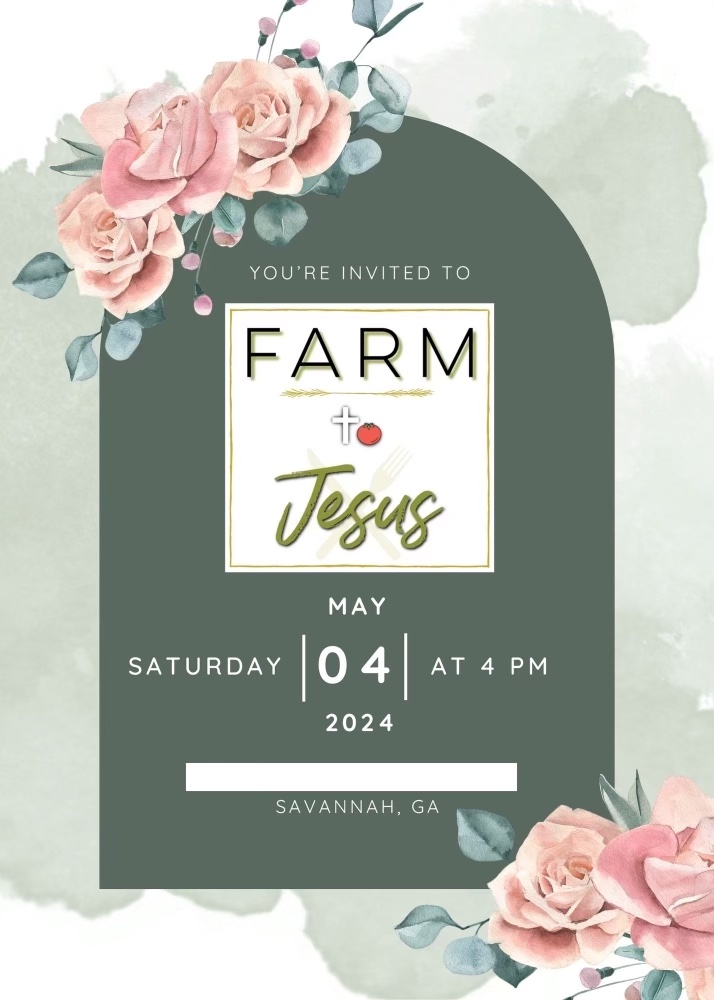
** Also, please bring a container with lid for your children to use to gather mulberries with! Our trees are loaded, and they’re delicious!
After Discussion Notes
- We talked a lot about what it means to be vulnerable. What does vulnerability look like? How do we bring that to the Lord, to our spouses, to our children, and to our friends?
- Often vulnerability can be confused for weakness, but it actually takes great courage and strength to be vulnerable with another.
- Opening ourselves up to share who we are is imperative for any successful relationship, especially our relationship with God.
 Farm to Jesus